So – naturally – I got lost while coming home from an appointment in a nearby town.
The key to getting lost graciously is to act as if where you’ve ended up is where you’d meant to go all along. But I was too agog at where I’d ended up to even pretend to be gracious. My mouth fell open.
In no time at all, I’d gone from modern streets and brand-new neighborhoods to this old country road and a feeling that I’d time-traveled into the 1800’s. Beautiful old houses flanked both sides of the road.
And I knew, without being told, that some of these homes had belonged to certain local families for generations. It was that kind of place.
Most were surrounded by expansive grounds with big old trees…
Sweeping lawns and glorious gardens.
On the lake side of the street, were more gardens, houses and infinite vistas….
Parkland and beaches and families at play….
Boats at the marina…
People fishing…
Where on earth was I?
Not one to panic till I’d run out of options, I kept going… and thought I’d seen that enormous old tree just a minute or so before I turned…
So I turned around again and kept going…..
And discovered a sign…..
Historic Bond Head.
I’d never heard of it.
Later, I’d learn that Bond Head, formerly known as Port Newcastle, was once a thriving harbour, with ships ferrying cargo to and from Quebec, Toronto to the west, Kingston to the east and various American ports.
In 1856, Bond Head and the neighboring village merged under the name of Newcastle. The overall region is now known as Clarington.
But right now, I was just busy being lost.
And then I saw a strangely beautiful old house.
This house must have a great story, I thought.
And this is how I met a man named Ron, whose historic home had belonged to generations of an illustrious Bond Head family which counted as relatives two Lord Mayors of London, England, and had a big impact on the life of many Canadians, including themselves.
There’s this: a crop of summer-blooming Amaryllis, a huge flower that normally blooms in winter — unless you’re like me and forgot the bulbs in the cold room until recently….
Then there’s this darling photo of Mr. D. and Mr. JC.
Then – for a change of pace – these two vintage cars….
…in front of my favorite 17-room mansion, Ebor House.
Well, there I was at Ebor House again last Saturday, and this time, for a very different reason.
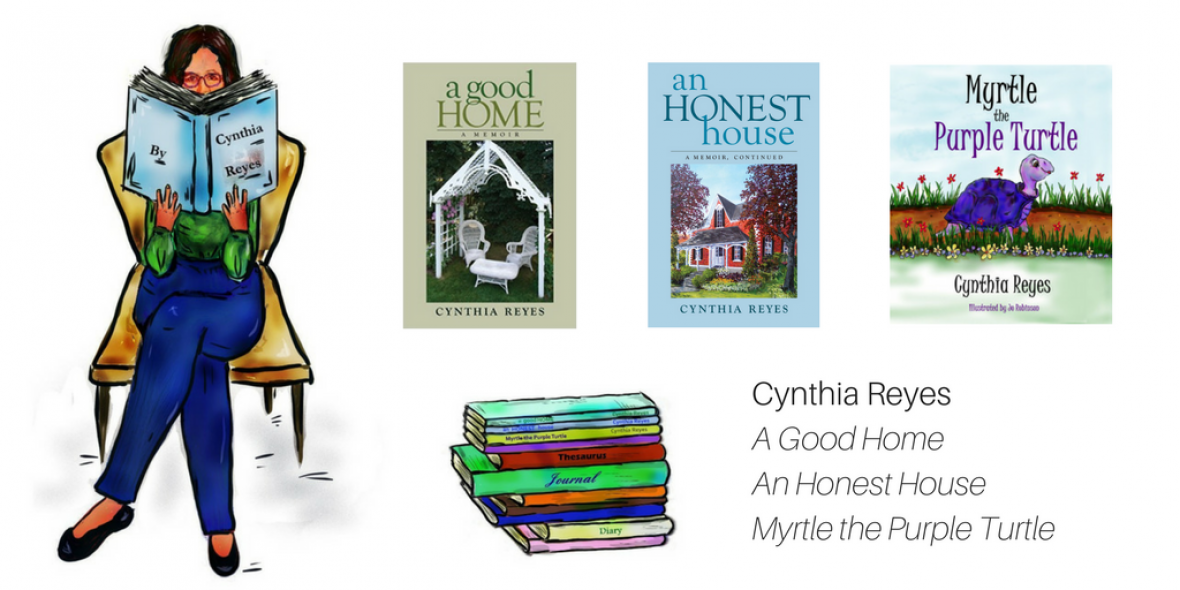
For the second time, Ebor House was a highlight of Doors Open Clarington. The architectural conservancy event features many beautiful heritage buildings in Clarington. And I was the author guest, invited to speak about my books, share my knowledge of Ebor House and also the Farncombs’ history.
While I was in one room, “Farnie”, great-grandson of Frederick and Jane Farncomb, was in another room, charming visitors with tales of growing up at Ebor House. He inspired me to keep going: his energy was so radiant!
Well over a thousand visitors — including a few cyclists- visited Ebor House.
Some were the younger generations of the Farncomb family, keen to learn the history of their family and their ancestral home. I was glad to meet them and answer their questions.
I was pleased that my sleuthing through history also ended up helping Doors Open Clarington. My thanks to MaryAnn Isbister, whose excellent design work turned my 6-part blog series on Ebor House into a full-colour fundraising booklet for the event.
The volunteers (including Leo Blindenbach, who was in charge of the Ebor House site) were organized and gracious — as were the new owners of Ebor House, Andrea and Nav. Yes – Ebor House has new owners — or should I say “stewards”? They have been loving and caring for the old house, and making further repairs.
Organizers Bernice Norton, Marilyn Morawetz, Leo and the rest of the Doors Open Clarington team should be very proud! Bravo, all of you!
A whole bunch of people have been telling me to get lost since I published the series about Ebor House.
“You need to get lost more often, Cynthia.”
“Get lost again, Cynthia.”
On and on it goes.
What no-one asked is:“How come you got so lost?”
**
It all started with an earlier wrong turn.
And a good-looking man.
I’d decided to drive home from my appointment using a country road – a back road – instead of the highway.
By now you know that I could get lost in a room. So before I knew it, I was lost.
Turning around in a driveway, I was either thinking a swearword or saying it out loud, when suddenly I saw a man.
A tall, handsome man.
So being a gracious person, I said a most gracious thing:
“I didn’t know Black people lived around here.”
**
Time stopped as I realized what I’d just said.
He stared at me, speechless.
I stared back, horrified at myself. The fact that I’m also Black did not excuse my careless words.
Then – thank God – he laughed.
“Nice homes in this area,”I said, desperately trying to get my foot out of my mouth.
“Some nicer ones on your way south,“he said. “Beautiful new homes. Just keep going. You can’t miss them.”
**
Remember I told you this, folks:
Words can get a person into trouble.
Those crazy words I blurted, for example.
But these ones too: “You can’t miss them.”
Because some of us can. We’re programmed that way. And it gets worse when we’re flustered from having said entirely the wrong thing to a stranger.
The neighborhood I ended up in was not where he meant. Worse, I ended up going in entirely the wrong direction to get to my home.
And ended up in front of Ebor House.
**
So I could blame that lovely gentleman for all of this. But really, I thank him.
For not being offended at my ungracious remark.
And for being a crucial link in a chain of otherwise ridiculous events that landed me first in front of Ebor House, then, inside Ebor House…
… having coffee in Ron’s kitchen.
Next, I could blame all you readers who encouraged me to keep posting the series, which eventually led to bloggers and other people from around the world telling me to “Get lost, Cynthia.”
**
This is, of course, my strange way of thanking that unknown man, the mysterious chain of events, and everyone who followed the series and encouraged me to keep going. THANK YOU.
I still don’t know what mysterious force led me to Ebor House. Was it all serendipity? Did the house call me there?
Did John and Jane, who lost their sons in one day – did they want their story to be told, after being in the shadows for so many decades? And if so, are they disappointed that I didn’t tell the whole story?
I don’t know. I won’t even guess.
I’m exhausted now, and astonished at myself for accomplishing this series. But I’m also grateful. So much so, that just now I nearly wrote:
“I’d have been lost without you.”
The problem is that it would probably have been true!
Ron has invested untold time, love and money into his home.
“This place has nurtured me. Not just me but others too. One friend stayed here in the winter, healing from an accident. It’s nurtured her.”
The children are grown up. Ron says it’s time to leave. Ebor House is too big for one person.
He looks around at rooms sparkling with sunshine, beauty and a strong sense of well-being. He tells me yet another story about the house and the Farncombs. He calls each family member by first name.
I say: “You don’t sound like a man who’s selling this house.”
He says he is.
“I truly believe the house is looking for a buyer, rather than a person looking for this house. It’s a very special place. Last evening four of us had a wonderful supper under the trees and at the end of our meal we were visited by one of the hawks that have decided to call this place home this year. Just magical!”
**
As for me?
It started when I got lost a few weeks ago and saw this house.
I wanted to know more.
But the single discovery that kept me searching was the August 1901 New York Times story about the drowning of the two Farncomb boys.
My heart sank when I read it.
A parent myself, I wanted – perhaps even needed – to know that things turned out well for the family.
Of course — since this is real life and not a fairy tale — they did and they didn’t.
**
The Farncomb family survived and, over the decades, many thrived.
John and Jane and the boys were not forgotten.
But life had to go on, at least after a while.
And so it did.
Dorothea, Frederick and Jane’s only daughter, was a woman of strong faith who wrote for the Farmer’s Advocate, and published religious books. Other Farncomb descendants became successful in Canadian business, education, law, medicine and other fields such as literature and media.
Family members still own property in Bond Head, and still have influence. In 2002, one descendant (among other residents) protested against a plan to change the name of a local street. He argued it made no sense. He also pointed out that Farncombs had lived there for 150 years and that he owned much of the land in the area.
His side won.
**
My interest in a house became a story about a multi-generation family. Their joys, sorrows, achievements. Their lives.
The trail had many twists and turns, and sometimes, they alarmed me. Combing through the city of London’s archives, I found a court case involving slave-ship owners. Thomas Farncomb, the wealthy ship owner who became London’s Lord Mayor, was involved.
A descendant of enslaved people myself, my hackles immediately went up. Had I spent all this time researching a house built with money earned from the slave trade? After all, it was Frederick Farncomb’s inheritance from his uncle Thomas that was used to build Ebor House.
I was relieved to discover that Thomas had been brought to court by two men whom he had disparaged over their ownership of slave ships. It appears he was opposed to the slave trade.
There were other discoveries along the way. Some are included in this story, and some are not.
I double-checked each of my findings, then asked homeowner Ron and Myno Van Dyke, secretary of the local historical society, to read much of what I’d written. I thank them for their help.
I conclude the series knowing I’ve done my best to make it fair, factual — and kind. There is much more to the story of Ebor House and its family than I’ve written here, but this is the story I wanted to share.
One Farncomb descendant is writing a historical novel on Dorothea Farncomb and the family. Another, Balfour Le Gresley (who sold the house to Ron), has studiously researched his family history. I decided to leave it tothem to make their own discoveries and decide what to share. (Though I’ve met them both, neither contributed to this series in any way.)
This series is dedicated to the descendants of Frederick and Jane Farncomb.
**
Thanks to: Newcastle Village and District Historical Society; Library and Archives Canada; Archives of the City of London, England; Trinity College, Port Hope; Canadian Anglican Church; St. George’s, Newcastle; the Canadian Encyclopaedia; The New York Times and several other Canadian and American newspapers; other sources. Some photos of Ebor House came from Promise First Realty’s website.