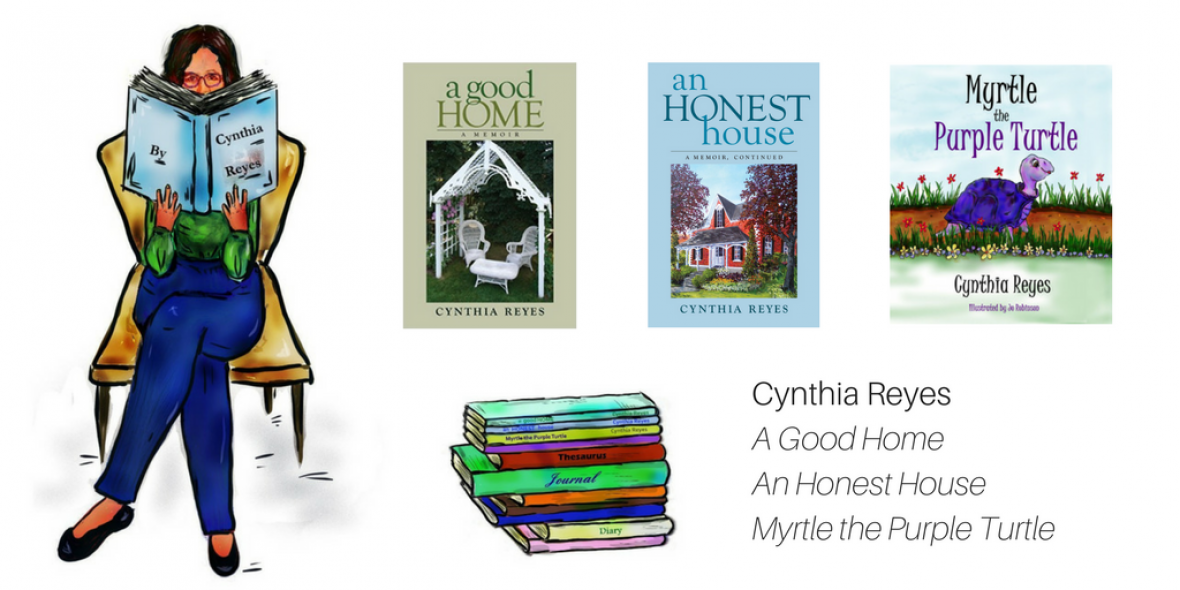
A Good Home

Whose Truth?

Once in a while, one of the writers I coach will cite an American memoirist who said if people wanted you to write warmly about them, they should have behaved better.

Nothing wrong with that statement. It’s a catchy quote that supports truth-telling in memoirs.

Except.

Except when it’s used to justify careless, mean-spirited or defamatory claims against others who don’t have a chance to defend themselves.

Memoir writing calls for us to be truthful, yes. But I’d argue that it also calls for us to never carelessly harm others.

When I was a child, I thought my grandmother was a hateful person. And early in my first draft of A Good Home, I was merciless in how I described her. But later in that same first draft, I revealed a surprise: when I ran away from home as an adolescent, it was to her home that I returned, and we became best friends.

But the draft was long and I took out that chapter (and a few others) before asking my siblings to read the manuscript.

My sister read the manuscript and immediately reacted. “You left out all our grandmother’s good qualities,” she said.

And she was entirely right. I had done my grandmother a great disservice in that draft. Luckily, it was only a first draft.

~~~

Relationships sometimes end badly. When that happens, there’s usually blame on both sides, but the story we know best is our side. We feel wronged, deeply hurt. And no – we definitely don’t want to ask the other person to explain their behaviour. We’re too hurt, or it’s been too long. In some cases, it’s impossible because the person is now dead.

I was fortunate: I got to know and understand my grandmother’s actions better, and to experience a different side of her when I was older.  I grew to love her dearly.  That gave me the material needed to paint a more balanced picture of her. I believe my book ended up being more credible because of it.

Not everyone is that lucky. So, sooner or later, someone I’m coaching will write about someone who hurt them deeply. Now, they want to discuss whether or how it should be included in their memoir.

The first thing I will say is: Don’t hold back in your first draft. A critical reason is because writing a memoir helps us understand ourselves and sometimes others better. So let it all hang out in that first draft.

It’s the final draft – the one you will publish and send out into the world – that you need be concerned about.

First, there’s the question of basic fairness.  Your written words give you power over others.   Is what you have written about someone else fair? Wield your power fairly.

Second, there’s the potential for defamation.  In many jurisdictions, you can’t be held legally responsible for defaming the dead. But you can be sued if the person is still alive and can prove that you damaged their reputation.

Third, there’s the question of unintended harm. What you write about someone who is now dead but may be easily identified by a reader could harm others you care about and didn’t want to hurt. That person’s children or other loved ones, for example. This doesn’t mean you should throw out everything you’ve written, but it does mean you should be aware of the potential risk of causing harm.

~~~

Our memories of our life experiences are uniquely ours and may be different from those of the other participants in those events. In other words, they’re your truth, as seen through your eyes, but they may not capture the entire truth – or even most of it.

Most memoirs now start with a disclaimer advising the reader that the book contains the author’s memories of events. Some authors may also change the names of certain people in the story, or find other ways to make them unrecognizable.  These devices may provide some protection for the author. But before you publish, give a thought also to those whom you did not intend to harm.  And to your own credibility as a writer.

My best wishes,

Cynthia.

A Good Home

The Kindness of Other Authors

Happy new year, friends!

We all need help and support along the way. As we start 2024, I decided to reblog a post about the authors who helped me in my early days – before I published my first book, A Good Home.

First, Louise Penny. This Canadian author is known for her Inspector Gamache/Three Pines mysteries.  Her lyrical, emotional, insightful writing has won several big awards and put her books on the New York Times bestseller list.

The day I discovered my first Louise Penny book was shortly after I’d turned in my latest feature for a magazine.  That story – written several years before – was titled Possession. It was about the deeply rooted hunger to possess precious things. Louise’s book, The Brutal Telling, was about a deeply-rooted hunger to possess precious things. I was amazed by the serendipity.

Blog - The Brutal Telling

Louise bravely explores that borderland place where the unexplained and the divine intersect with the here and now, the temporal. It’s something I try to do in some of my own writing.

But it was Louise’s own back story – and the similarities between her life and mine — that most surprised me.

We are, I discovered, both Ryerson graduates, both former CBC journalists. But that’s just the stuff that goes into resumes. As I read about her, I realized that we’d both also known what it was like to hit rock-bottom. I was still going through a harrowing fight against painful injuries from a car accident and the very painkillers that were meant to help me cope. Louise had fought a lengthy battle against alcoholism.

I took all these similarities as a sign from above – one of those borderland moments where the divine intersects with the temporal.  It was time, I decided, to get serious about the book I’d started writing a long time ago. But first, I wrote to Louise herself.

Blog - Louise Penny

“The publisher sent me the story layout for my final sign-off just one day before I started your book”, I wrote, referring to Possession, the magazine story, “and as I read your novel, I thought – with a shiver – ‘this is another of my life’s unexplained coincidences’.”

She wrote me back right away: “We seem like sisters,” she said. “I’m glad you’ve discovered my books – and suspect you are a gifted, fabulous writer.”

Such kind encouragement. Louise’s next email contained advice for me as a would-be author. Before you send your manuscript to a publisher or agent, she urged, polish, polish, polish. It’s your one chance, so make it the best it can be.

As I neared the completion of the manuscript, other authors helped.

Blog - Yvonne Blackwood

Yvonne Blackwood, author of Into Africa: The Return, repeatedly helped me polish. She suggested small improvements throughout the text.

Lee Gowan, creative writing professor at the University of Toronto and author of Confession, paid me a precious compliment: he read the manuscript to his mother.

“It was a very moving experience, I can tell you,” Lee wrote.  “Often had a tear or two in my eyes and a hitch in my voice as I was trying to read through.” Lee also stopped me from editing out a whole section of the book that, it turns out, readers love.

Blog - Lee Gowan

When the book was completed, and in the hands of the publisher, I wanted to find out from an author what this next period would be like. Given my need to pace myself, and still attend therapy for long-term injuries, I wanted to make the best of limited resources. Enter Ann Preston, author of The No-Grainer Baker cookbook.

Blog - No Grainer Baker

She was introduced to me by a friend. Ann became a guardian angel, telling me what to expect, and, with her own book on its way to becoming a bestseller, sharing tips by the week.

Blog - Ann Preston

Jan Wong (who self-published her most recent bookOut of the Blue) had experienced both traditional and self publishing. She openly shared her experience with promoting and distributing her books, while I made notes of everything from postage rates for books to dealing with invitations for book readings.

Blog - Jan Wong

Authors Merilyn SimondsOlive Senior and Donna Kakonge also encouraged me.

With wise words of support, small notes of caution, and precious bits of common-sense, these authors helped me to make A Good Home a success. Bravo and Thanks to them all. 

~~~

May 2024 be kind to you and your loved ones.

Cynthia.

A Good Home

A Winter’s Tail

A favourite from 2015

The birds are back with songs of Spring

Their tunes incite imagining

That Winter’s end will soon arrive

And living things shall haste to thrive

~~

Via vitalxrecognition.wordpress.com/
Image Thanks to: vitalxrecognition.wordpress.com/

A Winter’s tail, how bittersweet!

Today it’s sun, tomorrow sleet

And wind to stop us in our tracks

And cold to freeze Spring-hungry backs

~~

One day we feel a wave of hope

Warmed by our thoughts that we can cope

And then come gales of Winter still

And blizzards coat the windowsill

~~

Blog Photo - Icy Winter evening

Hey, Winter! Do your level best

Your time is near to take a rest

For Lady Spring prepares to rule

She’ll thaw your ice and warm your cool

~~

She’ll rout you, kick your icy tail

She’ll make you wish you’d stopped at hail

Who’s mighty now, oh Freezer Guy

Who rules the roost? Oh my, oh my!

~~

Blog Photo - Rainy Garden with Flowering shrubs

Spring wakes the earth; the gardens flower

She turns grass green and makes you cower

She strips away your winter clothes

And sprinkles sunshine up your nose

Blog Photo - Mama's Garden2

She brings new life to garden trail

She gives new strength to plants so frail

To stand up ‘gainst your mighty storm

And so defy your freezing form

 ~~

Hey! Winter’s Tail, I kid you not

Pick up your snow and off you trot

Break down your ice and melt away

See you around, when skies are grey

 ~~

Blog Photo - Lilacs and forget Me Nots

See you next time, oh Frigid One

But not too soon, for Spring’s begun

And three great seasons I shall see

Before you’re back to torment me.

 ~~

Thanks to Hamlin Grange for all original photos.

Dedicated to all northern gardener friends.

A Good Home

A Crash Course in Cooking

If you’ve read this blog or any of my books, you know that certain talents missed me completely.

Blog Photo - Jelly Jar one

I make herb jellies well enough, as I wrote in A Good Home. But cooking, baking, knitting, and any form of interior decoration are foreign lands. My husband, daughters, sisters and friends live there, and they speak a whole different language.

I once made cauliflower with cheese — a simple 2-ingredient dish — and forgot the cheese, as you may have read in An Honest House.

And that reminds me: I know part of the reason I never learned to cook. When my sisters were watching my mother cook, I was nowhere to be found. I was always in a tree, on a rooftop, or hiding in the field behind our house, reading books.

My poor husband sighs elaborately during Christmas dinners and says he knows he married the wrong sister but he’s stuck with her. 

Blog Photo - Christmas table2

“But why have you stuck with me?” I usually ask.

“You have other talents,” he laughs.

“Name one,” I demand.

“Err… ummm..”   He pauses, pretending to think hard about it.

I once joked that I’m gifted only at ‘exterior design’ — gardening — but stopped that joke for fear it would reveal an awful truth: that, deep down, I’m really superficial. I mean, what if when I dig beneath my surface, all I find is more surface?

TWIGS COVER

But I digress.

Since the interior arts are not my thing,  it’s weird that I’m the one doing most of the cooking in this house since the pandemic began.

Blog photo - Baby read a story by mother

Having invited daughter, son-in-law and new baby to come and live with us during this time, I knew we would cook more often, yes. I just didn’t know the cook-er would be me.

What’s more, the only thing I truly ruined took place last evening when the large salt grinder broke open over my one-pot meal. 

Blog Photo - Cookbooks - plant-based dishes

I’m still trying to figure out how I could have prevented that sad event, but as I stood at the stove and watched the destruction of the meal I’d spent hours preparing (yes, I am very slow at this), I froze, in horrified disbelief.

If a person has to ruin a dish, shouldn’t it be for a more splendid reason, like going off to get myself a glass of expensive red wine and forgetting the stove was on, or going to answer the doorbell because my husband had surprised me with a bouquet of fabulous flowers, or some such glorious thing?

But no. My big failure at cooking had to involve a large grinder of Himalayan salt falling apart in my own hands, over the entire meal.

Blog Photo - Cauliflower dish2

So, having declared that failure upfront, I am sharing a photo of a dish I made recently.   It starred a roasted cauliflower, which is slightly ironic, given my sad history with that vegetable.  It’s a stew, with potatoes, zucchini, onions, garlic, tomatoes and peas.

~~

Featured Image -- 27162